
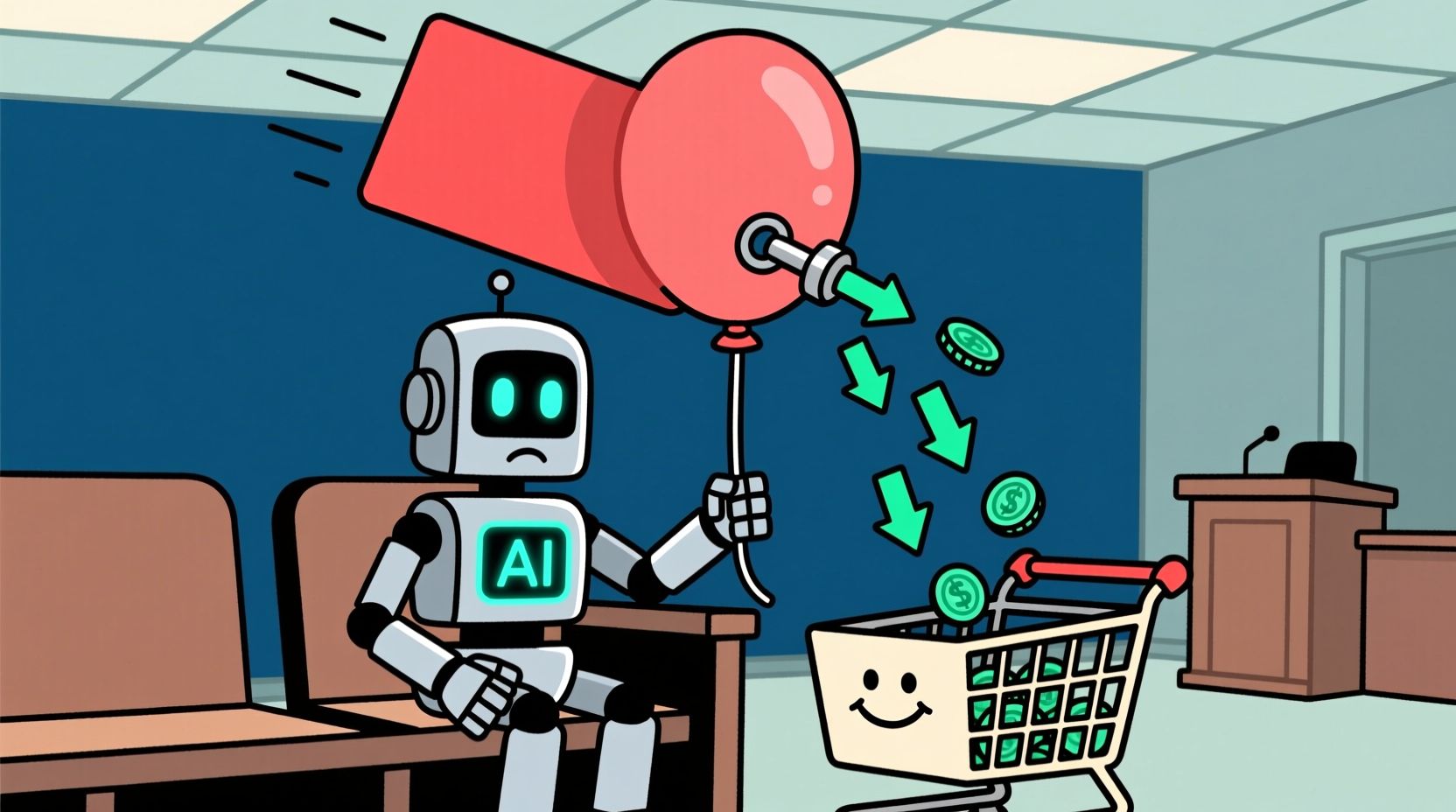
Artificial intelligence gets blamed for a lot of things these days.
Taking jobs. Changing industries overnight. Making entire careers feel uncertain.
But inflation?
That's where things get interesting.
In congressional testimony and remarks over the summer of 2026, Federal Reserve Chair Kevin Warsh argued that the AI boom might not end up fueling inflation in the long run. In fact, he believes it could eventually do the opposite — he's gone as far as calling the AI investment wave "structurally disinflationary."
So... what does he mean by that?
Let's break it down.
Everyone says AI is causing companies to spend billions. Wouldn't that naturally increase inflation?
That's the obvious question.
Building AI infrastructure isn't cheap. Companies are pouring huge amounts of money into data centers, specialized chips, electricity, networking equipment—you name it.
At first glance, that kind of spending looks like it would push prices higher.
Warsh agrees... at least initially.
His point is that there's a difference between higher prices and inflation.
They're related, but they're not exactly the same thing.
Wait... aren't higher prices basically inflation?
Not always.
Imagine your local grocery store suddenly sells twice as many strawberries because farmers had an amazing harvest.
Prices might actually go down because there's more supply.
Now flip the example.
Suppose everyone rushes to buy AI servers and graphics chips at the same time.
Those products become more expensive because demand temporarily outpaces supply.
That's a price increase.
Warsh's argument is that if companies eventually become much more productive thanks to AI, they'll produce goods and services more efficiently.
And greater productivity can offset those temporary price increases.
He's called it the "most productivity-enhancing wave" of his lifetime — a strong claim, and one his own colleagues on the Fed don't all share.
So he's betting on productivity?
Pretty much.
Think back to the early internet.
Businesses invested massive amounts of money before they really saw the benefits.
Eventually, though, many tasks became faster, cheaper, and easier.
Warsh believes AI could follow a similar path.
If workers can accomplish more in less time, companies may not need to raise prices as aggressively.
That's the optimistic scenario.
Does he think AI will eliminate jobs?
Interestingly... no.
At least not overall.
Warsh acknowledged there could be disruptions.
Some jobs will almost certainly change.
Some may disappear.
Others—many of which probably don't even exist yet—will be created.
His expectation is that AI ultimately supports employment rather than permanently shrinking it, even if the transition feels messy along the way.
Is everyone at the Fed convinced?
Not even close.
Nobody really knows how quickly AI will reshape the economy.
Some economists think productivity gains could take years to appear.
Others worry companies might spend enormous amounts without seeing the expected returns.
Critics have also pushed back on Warsh's framing directly, arguing that betting rate policy on a productivity payoff that hasn't shown up yet is risky — even calling it a "trap" if the gains arrive late or land unevenly.
And there's another challenge...
The Federal Reserve can't simply assume AI will solve inflation.
It still has to make decisions based on actual economic data—not hopeful predictions.
So what happens if AI spending keeps pushing prices up?
Then the Fed does what central banks are supposed to do.
It watches inflation closely.
If higher prices begin spreading throughout the economy instead of remaining isolated to certain industries, policymakers can respond with interest-rate decisions.
Warsh's message wasn't that inflation has disappeared.
It was more nuanced.
He believes temporary AI-related price increases don't automatically become long-term inflation if productivity grows alongside them.
What's the biggest takeaway from all this?
Maybe it's this:
We've spent the last couple of years talking about AI almost entirely through the lens of risk.
Will it replace workers?
Will it make misinformation worse?
Will it disrupt entire industries?
Those are important questions.
But there's another possibility worth paying attention to.
What if AI ends up making economies more productive?
What if today's expensive investments become tomorrow's efficiency gains?
Nobody can say for sure.
Not yet.
Still, it's refreshing to hear a conversation about AI that isn't just doom and gloom.
Sometimes the biggest economic changes don't happen because something gets cheaper overnight...
They happen because people figure out how to do more with the same amount of effort.
And if Warsh is right, that could be one of AI's biggest contributions to the economy.
sources
https://edition.cnn.com/2026/08/05/economy/kevin-warsh-fed-inflation-ai